

Table of Contents
- Why San Antonio Plumbers Lose Leads Before the Phone Rings
- Step 1: Set Up a Google Business Profile for Plumbers That Ranks in the Map Pack
- Step 2: Build a Plumbing Website That Turns Visitors Into Booked Jobs
- Step 3: Write Plumbing Lead Follow-Up Scripts That Save Lost Calls
- Step 4: Use Plumbing Lead Tracking Tools to See What Actually Pays
- Step 5: Measure Lead Quality and Profit, Not Just Lead Count
- Step 6: Choose Marketing Channels and Budgets That Fit a Family-Run Shop
- Conclusion: Your Next 30 Days to More Plumbing Leads
- Frequently Asked Questions
Last Updated: October 16, 2026
Why San Antonio Plumbers Lose Leads Before the Phone Rings
Most plumbing companies don’t have a lead problem. They have a response problem.
Homeowners with a burst pipe or a dead water heater don’t shop around. They call two or three plumbers and hire the first to respond. If your phone rings out or voicemail picks up, you’ve already lost that job.
So how do you improve plumbing leads in San Antonio? Fix the leaks in your own funnel before spending on advertising:
- Answering every call, even after hours
- Following up on missed calls within minutes, not days
- Making sure your business shows up when someone searches “plumber near me”
This guide walks through six practical steps you can start today.
The most common mistake we see: a plumber spends money driving new calls, but lets 1 in 3 ring out during busy hours. You’re paying for leads you never speak to.
Step 1: Set Up a Google Business Profile for Plumbers That Ranks in the Map Pack
A Google Business Profile is your free listing on Google Search and Maps. For plumbers, it’s often the single biggest source of new calls. When someone searches for emergency plumbing services nearby, Google shows a map with three businesses.
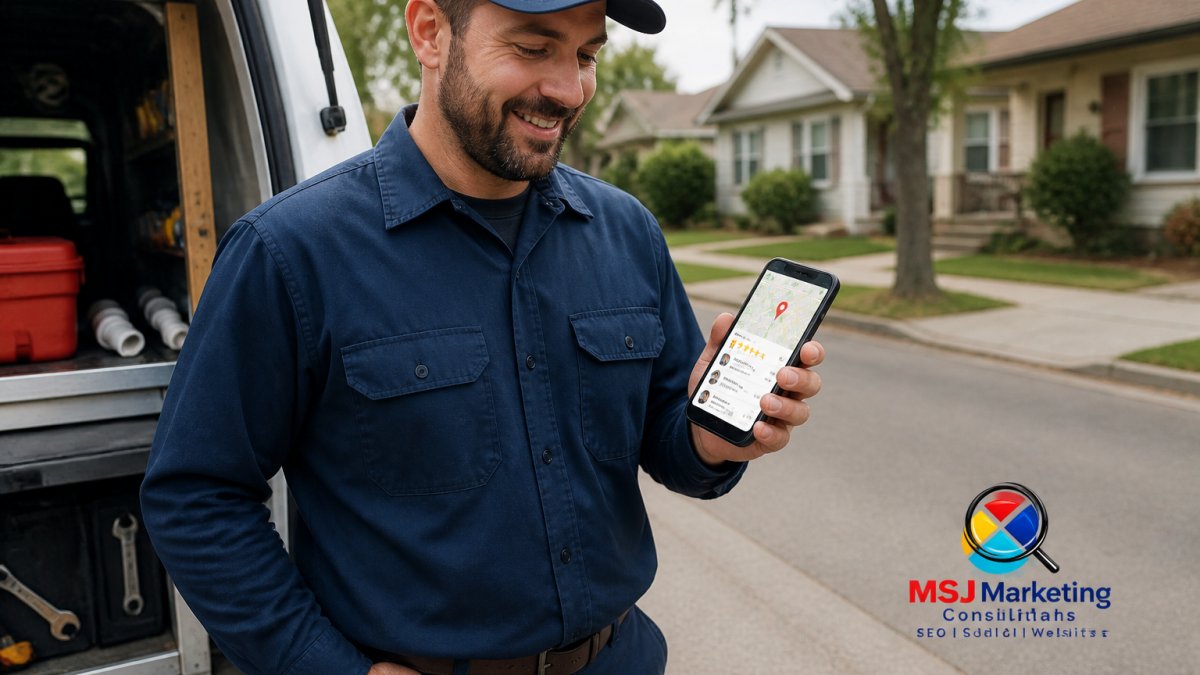
Most guides stop at “claim your listing and add photos.” Here’s the full setup sequence, in order.
Step-by-Step Setup, In Order
- Claim and verify the listing. Search your business name on Google Business Profile and claim it, or create it if it doesn’t exist. Verification is usually by postcard, phone, or video, video verification is now common for service businesses and requires showing your van, tools, and license. Unverified listings don’t rank.
- Set your primary category to “Plumber.” This is the highest-impact field, since Google weighs it heavily for Map Pack placement. Add secondary categories only for services you actually perform, common ones include “Drainage service,” “Water heater repair service,” “Bathroom remodeler,” and “Emergency plumbing service.”
- Fill out the business description. Keep it under 750 characters. Write in plain language about what you fix and where you work. Mention your top services naturally, don’t keyword-stuff.
- Set service areas correctly. Add the cities, suburbs, and neighborhoods you actually serve, and hide your address if you’re service-area only. Don’t list areas you won’t drive to; Google can penalize listings that overreach.
- Add hours, including after-hours. If you offer 24/7 emergency service, mark it. Homeowners searching at 11 p.m. filter by “Open now.”
- Add your phone number and website. Use a tracked number if you want to measure calls from this listing separately.
- Upload photos in batches. Add at least 10 to start, vans, team in uniform, before/after shots, and your logo, then 2-4 new photos per week. Listings with fresh photos get more calls and direction requests.
- Turn on messaging if you can respond within a few hours. Slow responses hurt more than no messaging.
Reviews: The Weekly Habit That Moves Rankings
Reviews are one of the strongest local ranking signals, and they compound. The pattern that works:
- Ask in person before you leave the job, then send a text with a direct review link within an hour.
- Aim for a steady trickle, a few new reviews a week beats 30 in one day.
- Reply to every review within 48 hours. Thank positive reviewers by name; respond calmly and professionally to negative ones.
Posts and Q&A
Post once a week, a recent job, a seasonal tip (frozen pipes, a pre-winter water heater flush), or a quick photo. Posts expire, so consistency matters more than length.
Also check the Q&A section, where anyone, including competitors, can ask and answer. Seed your own Q&A with common questions (“Do you charge for estimates?”, “How fast can you get here?”) and answer them yourself so the right information shows up.
Your business description, services list, and posts all feed Google’s understanding of what you do. Write them the way a customer would search, “water heater repair,” “slab leak detection,” “drain cleaning”, not internal jargon.
Common Mistakes That Kill Map Pack Rankings
- Using a virtual office or UPS store address, Google suspends these.
- Stuffing the business name with keywords (“Joe’s Plumbing San Antonio Emergency 24/7”). Use your real name.
- Letting the listing go stale for months. Google favors active profiles.
Do these in order and your listing will outrank most local competitors within a few months. It’s the highest-return free work a plumbing company can do.
Step 2: Build a Plumbing Website That Turns Visitors Into Booked Jobs
Your website is where a curious visitor becomes a booked job. But most plumbing websites bury the phone number and make people hunt for a contact form. That kills your conversion rate.
A good plumbing website for lead generation does three things fast:
- Shows your phone number in the top corner on every page
- Loads in under three seconds on a phone
- Tells visitors what you fix and where you work
Pages Every San Antonio Plumbing Company Needs
You don’t need fifty pages. You need the right ones:
- Home with your phone number, service area, and reviews
- Services with one page per major job (drains, water heaters, leaks)
- Service areas listing each neighborhood you cover
Each service page should answer one question: “Do you fix my problem, and how fast?” Keep the text simple. Homeowners skim.
If your site is outdated or hard to update, a custom website built for local search fixes it, work MSJ Marketing Consultants handles for family-run trade businesses.
Step 3: Write Plumbing Lead Follow-Up Scripts That Save Lost Calls
Speed wins jobs. When you miss a call, the clock starts. A plumbing lead follow-up script is a short text or voicemail that keeps that lead warm.
Here’s a text template you can use today:
Hi [Name], this is [Your Company]. Sorry we missed your call. We can help with [service]. Are you free for a quick call now, or should we head your way this morning? Reply YES and we’ll call right back.
Keep it short. Give a clear next step. Send it within five minutes if you can.
For voicemail, try this:
Hi [Name], [Your Company] here. We got your call about [service]. We’re available today. Call us back at [number] or reply to this text and we’ll reach out.
The plumber who responds in five minutes beats the one who responds in an hour. Set up automatic texts for every missed call so you never lose a lead to silence.
Step 4: Use Plumbing Lead Tracking Tools to See What Actually Pays
You can’t improve what you don’t measure. Plumbing lead tracking tools show you where each call and form came from, so you stop guessing.
Start with these:
- Call tracking numbers that show which channel rang your phone
- Form tracking in your website analytics
- A simple spreadsheet logging every lead, its source, and whether it booked
Call tracking is the big one: it assigns a different number to your website, Google listing, and social pages, so when the phone rings you know exactly which one sent the job.
That data changes decisions, if your Google listing sends twenty calls a month and social sends two, you know where to focus.
Step 5: Measure Lead Quality and Profit, Not Just Lead Count
Twenty cheap leads can be worth less than five good ones. Track lead quality, not just quantity.
Build a simple table to score each lead:
| Lead Source | Leads/Month | Booked Jobs | Avg Job Value | Close Rate |
|---|---|---|---|---|
| Google Business Profile | 20 | 9 | High | 45% |
| Website form | 8 | 3 | High | 38% |
| Referrals | 6 | 5 | High | 83% |
| Social media | 12 | 2 | Low | 17% |
The source with the most leads isn’t always the best. Look at close rate and average job value together. A referral with an 83% close rate beats a social lead with a 17% one, even if social sends twice the volume.
This is how you find high-value jobs instead of chasing noise.
Step 6: Choose Marketing Channels and Budgets That Fit a Family-Run Shop
Not every channel fits a small shop. You want the ones that bring qualified leads without draining your budget. The mistake most plumbers make is chasing the newest channel instead of building a repeatable system that runs on relationships.
Start with the free and low-cost wins:
- Google Business Profile (free, high impact)
- Referrals and local partnerships (free, high trust)
- Your website (one-time build, long-term payoff)
Then add paid channels once the basics work. Paid search brings fast leads but costs more per lead, test small, track everything, and scale what pays.
Google’s official guidance for local businesses
The Referral System Most Plumbers Never Build
Referrals are the highest-close-rate leads in the trades, and almost no plumbing company has a real system for them. Here’s a repeatable one:
1. Past customers. After every completed job, send a short text or email: “Thanks for choosing us. If you know a neighbor who needs a plumber, here’s a code for them, and here’s one for you.” A two-sided thank-you turns one job into two or three. Track who refers and follow up at year’s end.
2. Property managers. Apartment complexes, rental portfolios, and HOA managers need a reliable plumber on call, one property manager can send 10-30 jobs a year.
3. Real estate agents. Agents need fast, trustworthy plumbers for inspections and pre-sale repairs.
4. General contractors and remodelers. If you don’t do remodels, partner with contractors who do.
5. Other trades. HVAC techs, electricians, roofers, and restoration companies all meet homeowners with plumbing problems.
How to Allocate a Small Budget
For a family-run shop, build the free channels first, then layer paid on top.
- Months 1-3: Google Business Profile, review requests, and a referral program. Spend nothing but time.
- Months 4-6: Add a simple website with service pages and a contact form. One-time cost, long-term payoff.
- Months 7+: Add paid channels only after you can measure close rate by source. Start small, track every lead, and cut anything that doesn’t pay back.
The rule: don’t spend on a new channel until the free ones are running and you know your close rate from each.
Family-run plumbing shops with tight budgets that need leads now, not in six months. Start with your Google listing and referral system before adding paid channels.
Measuring What Each Channel Actually Returns
Before scaling any channel, answer three questions:
- How many leads did it send last month?
- How many booked?
- What was the average job value?
A channel with 20 leads and 2 bookings is worse than one with 5 leads and 4 bookings. Track close rate and average job value together, not lead count alone.
Not sure which mix fits your shop? MSJ Marketing Consultants builds that plan for trade businesses, looking at your close rate and job value to recommend channels that match.
Conclusion: Your Next 30 Days to More Plumbing Leads
The challenge is simple: most plumbers lose jobs to slow response and weak local visibility, not to a lack of demand. Fix those two things and your phone rings with better leads.
Start with your Google Business Profile, then build a fast website and a follow-up system. MSJ Marketing Consultants helps family-run plumbing companies in San Antonio do all three, with local SEO, custom website design, and social media management built for small shops, tracking what actually brings booked jobs so you spend where it pays.
Book a free strategy call with MSJ Marketing Consultants and start turning more searches into booked jobs.
Frequently Asked Questions
How quickly should a plumbing company respond to a new lead?
Respond within five minutes during business hours. Homeowners with a burst pipe or failed water heater usually call the first two or three plumbers on their list, and the one who answers first often wins the job. Set up a shared phone schedule so someone always picks up, and use an automatic text reply after hours that promises a callback time. Speed alone can lift your close rate without spending more on advertising.
How can plumbers get more customer reviews?
Ask at the moment the job is finished, while the customer is happy and the invoice is being signed. Hand them a card with a QR code that opens your review page, or send a text with the link within an hour. Reply to every review, including negative ones, because responses show future customers that you pay attention. A steady flow of new reviews keeps your Google Business Profile ranking and gives searchers the confidence to call.
What should a plumbing website include to generate more calls?
Your phone number should be visible at the top of every page, and each major service needs its own page, such as drain cleaning, water heaters, repiping, and leak detection. Add your service area, license information, real photos of your team, and reviews. Pages that load in under three seconds and work well on a phone convert far better, since most emergency searches happen on mobile.
How can a plumbing company track which marketing efforts generate leads?
Use call tracking numbers for each channel, such as your website, Google Business Profile, and referral partners, so every incoming call is attributed to a source. Pair that with a simple spreadsheet or CRM that logs the lead source, job type, and whether it turned into booked work. After a few months you will know your cost per booked job by channel, which tells you where to spend more and what to cut.